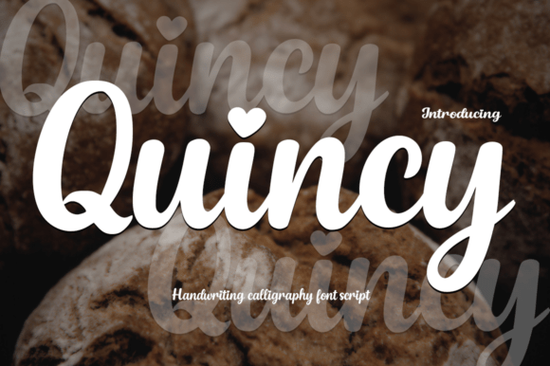
If you're looking for a script font that blends elegance with personality, Quincy Font offers a thoughtful balance. Designed with smooth, handwritten strokes and subtle calligraphic flair, it’s especially well-suited for projects that need warmth like wedding stationery, boutique branding, or heartfelt social media quotes. What makes Quincy stand out are the delicate heart-shaped dots on the “i” and “j,” a small detail that adds charm without overwhelming your layout.
Paired with Quincy is a bonus font called Playtoon a bold, cartoon-inspired typeface full of energy. While Quincy leans into graceful femininity, Playtoon brings playfulness, making the duo surprisingly versatile. You can use them together for contrast (think: a soft headline in Quincy over a bouncy subheading in Playtoon) or separately depending on your project’s mood.
When should you use Quincy Font?
Quincy works best when you want to convey sincerity and style without appearing overly formal. It’s ideal for:
- Wedding invitations and save-the-dates – its flowing lines feel personal and romantic.
- Small business logos – especially bakeries, florists, or handmade skincare brands.
- Social media graphics – quotes, announcements, or product highlights that benefit from a human touch.
- Hand-lettered-style packaging – for artisanal goods where authenticity matters.
Because it’s a script font with connected letterforms, Quincy reads best at larger sizes. Avoid using it for body text or tiny labels it’s meant to be seen and felt, not skimmed.
What makes Playtoon a useful companion?
Playtoon shines in contexts where fun and clarity matter more than elegance. Its exaggerated shapes and open counters make it highly legible even for young readers, which is why it’s great for:
- Children’s books and educational worksheets
- Comic panels or illustrated story titles
- Promotional materials for family-friendly events
- Merchandise aimed at kids or playful audiences (think mugs, T-shirts, or stickers)
Unlike many display fonts that sacrifice readability for style, Playtoon maintains character while staying functional. That balance is rare and valuable if you’re creating content that needs to both grab attention and communicate clearly.
How does Quincy compare to other modern script fonts?
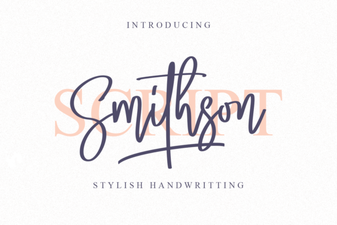
If you’ve explored Creative Fabrica’s script collection, you might already know fonts like Smithson, which leans more toward traditional calligraphy, or Overthinker, known for its dramatic swashes. Quincy sits somewhere in between less ornate than Smithson, more refined than Overthinker, and far more consistent in rhythm.
For beginners, fonts like Absolute Beginner offer simplicity, while duos like Pink Vibes provide coordinated pairings similar to Quincy + Playtoon. But Quincy’s unique heart-dot detail and steady baseline give it an edge when you need something distinctive yet easy to work with.
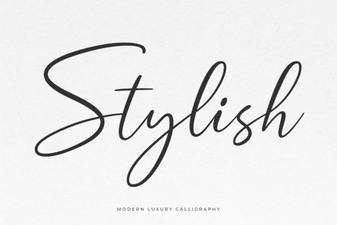
And if you prefer ultra-sleek scripts, Stylish might catch your eye but keep in mind it lacks the handwritten warmth that makes Quincy feel personal.
Tips for using Quincy effectively
To get the most out of Quincy Font:
- Pair it with simple sans-serifs. Clean fonts like Montserrat or Lato let Quincy’s curves take center stage.
- Avoid tight tracking. Give those connecting strokes room to breathe especially in headlines or logos.
- Use real ligatures if available. Many script fonts include alternate characters for smoother connections; check your software’s OpenType features.
- Limit all-caps usage. Quincy is designed as a lowercase-first font; uppercase letters may feel stiff in comparison.
Remember: the goal isn’t just to make something look pretty, but to evoke the right feeling. Quincy excels when your message is intimate, celebratory, or gently persuasive.
Ready to try it?
If your next project calls for a script that feels both polished and personal with a little whimsy built in Quincy (plus its energetic sidekick Playtoon) could be exactly what you need. Both fonts are available through Creative Fabrica’s subscription or one-time purchase model, giving you flexibility based on how often you design.
Before you download, ask yourself:
- Is my audience likely to respond to soft, handwritten aesthetics?
- Do I need a secondary font for contrast or supporting text?
- Will this be used commercially? (Both fonts include commercial licenses.)
If the answer to any of these is “yes,” Quincy Font is worth adding to your toolkit.
Try It Free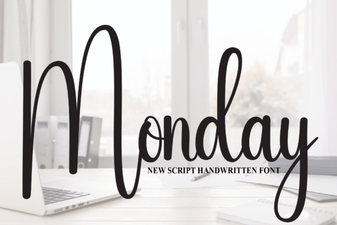 Monday Font: a Modern Tool for Creative Projects
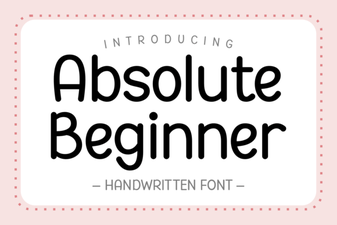 Your Guide to Fonts for Absolute Beginners
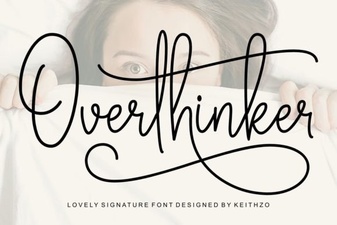 Overthinker Font: a Designer's Creative Toolkit
 Bold Design: Creative Uses of Thick Fonts
 Smithson Font: a Designer’s Typographic Toolkit
 Elevate Your Design with Stylish Fonts